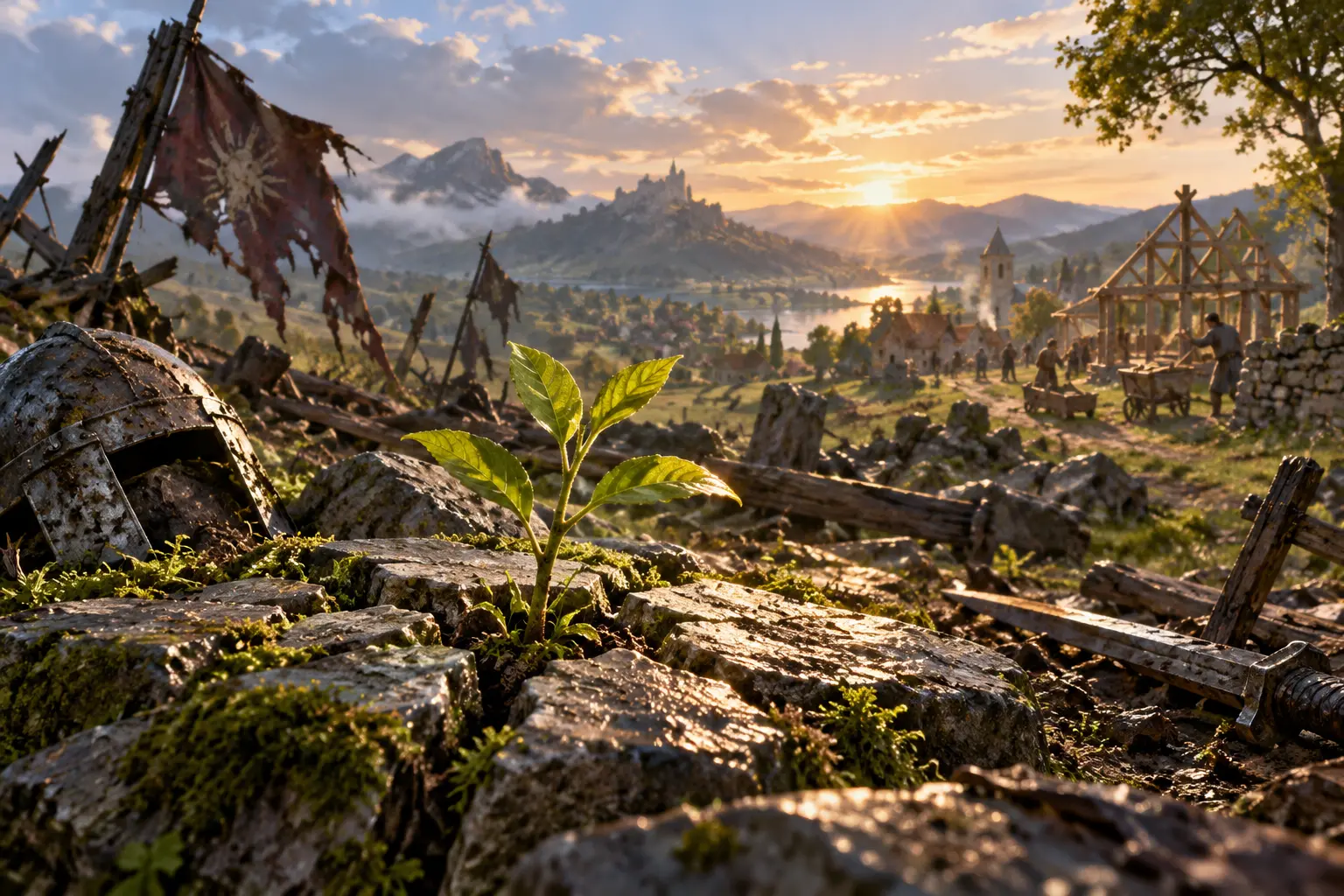
The Ring is destroyed, Sauron falls and Aragorn is crowned, yet Tolkien does not end his story at the moment of victory. The Hobbits must still travel home. Frodo’s wounds remain. The Shire has been damaged in their absence. Even after the shadow is defeated, there is work to do.
This extended ending is essential to Tolkien’s moral vision. Evil can be overthrown in a single decisive moment, but goodness is rarely restored so quickly. The work of renewal is slower, quieter and more local than the battle that made it possible.
The road does not return unchanged
Traditional adventure stories often promise that the hero will return to ordinary life with the danger safely behind him. Tolkien refuses that simplicity. The travellers have changed, and home has changed too. The Shire they remembered was not protected from every consequence of the wider war.
The Scouring reveals how much the Hobbits have grown. They no longer need a wizard or king to rescue them. Merry and Pippin can organise resistance; Sam can inspire rebuilding; Frodo can insist upon mercy even towards those who have harmed his home. Their journey becomes fruitful not through fame, but through the kind of people they have become.
Yet growth does not cancel loss. Frodo helps save the Shire without being able to remain fully at home within it. His sacrifice has preserved a peace he cannot entirely enjoy. Tolkien allows victory and sorrow to occupy the same ending.
Healing is not reversal
We sometimes imagine healing as a return to the person or place that existed before the wound. Middle-earth offers another picture. The White Tree flowers again, but the long years of stewardship are not erased. The Shire is replanted, but its people remember the trees that were cut down. Sam builds a family and tends the land, while carrying the memory of Frodo’s departure.
Renewal honours what was lost without allowing loss to become the only truth. It does not make the past unhappen. It creates the conditions in which life can grow around the wound.
This is why gardeners matter so much in Tolkien. A gardener cannot command growth. Sam can clear rubble, plant seeds and tend the soil, but he must also wait. Renewal combines action with patience, labour with trust.
The ordinary labour after the song
Battles gather attention because they compress courage into visible moments. Rebuilding asks for courage over months and years. It requires people to repair roofs, restore trust, plant what others may harvest and repeat small acts whose significance is not immediately dramatic.
Tolkien knew that the end of a war is not the end of its consequences. Those who return bring memories, grief and wounds into communities eager to resume normal life. A truthful peace must make room for those burdens rather than treating them as an inconvenience after triumph.
The ending of The Lord of the Rings therefore gives different callings to its survivors. Aragorn governs. Sam cultivates. Frodo departs. Each response belongs to the same renewal, though none looks identical.
Victory opens a door; it does not complete the house. What follows is the patient work of making places habitable again, of carrying wounds without surrendering to them, and of planting in hope for a future we may not control. Tolkien’s final wisdom is not merely that darkness can fall. It is that, after the fall, someone must still tend the garden.
Reading: J.R.R. Tolkien, The Lord of the Rings, especially “The Scouring of the Shire”, “The Grey Havens” and “The Steward and the King”.