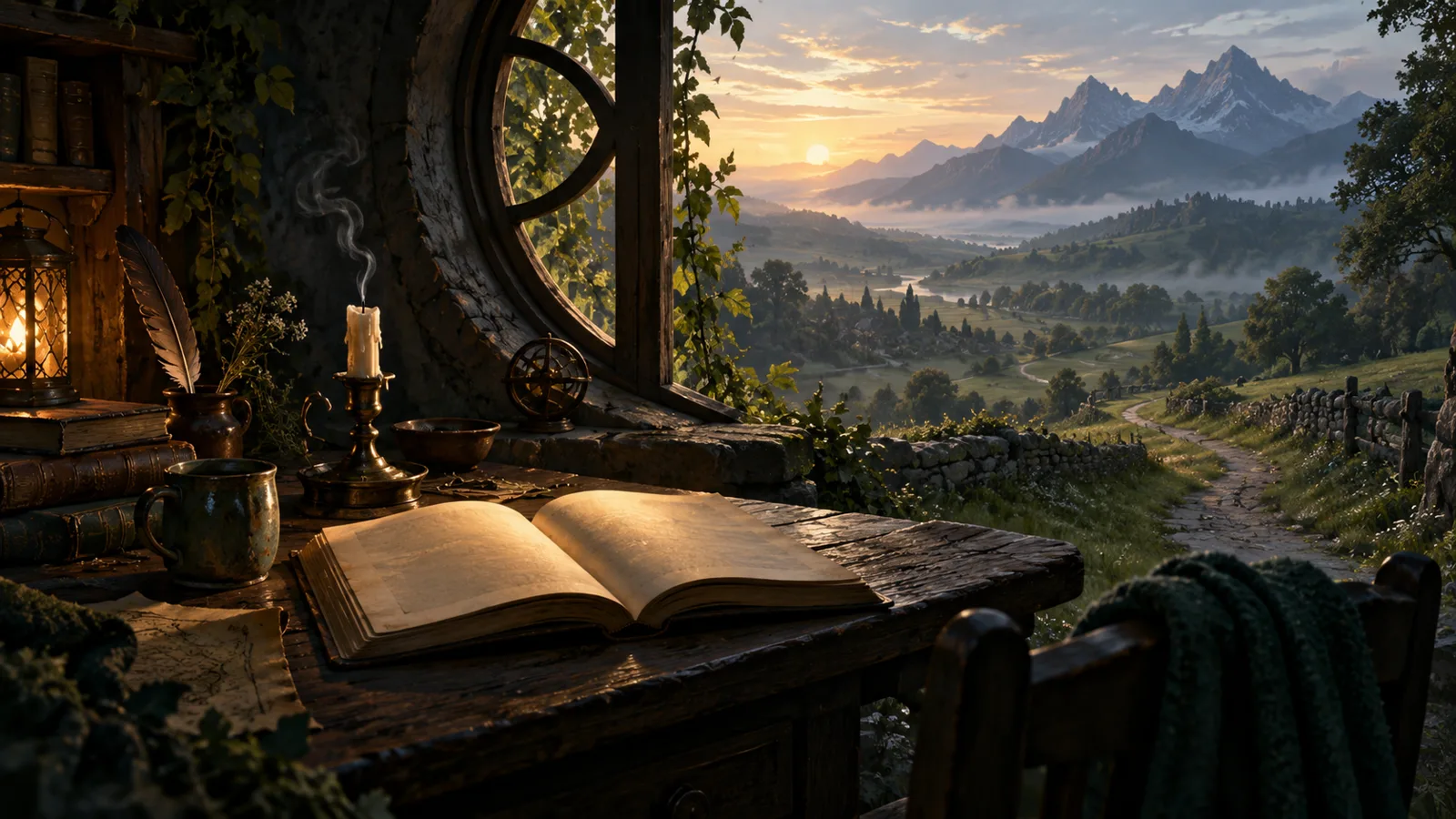
“All we have to decide is what to do with the time that is given us.”
Frodo has just learned enough of the Ring’s history to understand that the quiet borders of his life have already been breached. The thing left to him by Bilbo is not merely strange or dangerous; it is bound to a darkness far older and greater than the Shire, and the burden of knowing this seems almost as heavy as the Ring itself. His response is painfully recognisable: he wishes none of it had happened in his time.
Gandalf does not rebuke him for the wish. He admits that everyone who lives through such times feels the same. Then he gives Frodo a smaller, harder freedom: not the power to choose the age into which he has been placed, but the responsibility to choose how he will inhabit it.
The boundary of our choosing
There is mercy in the boundary Gandalf draws. We are not asked to govern history, to foresee every consequence or to carry the whole weight of an age. Much of what shapes our lives arrives without permission: illness, grief, upheaval, the failures of others, responsibilities we did not seek, and changes that close one road before another has become visible. To pretend otherwise is exhausting, because it makes us answerable for powers we never possessed.
Yet Tolkien does not use this truth as an excuse for passivity. Frodo cannot choose whether the Ring has come to him, but he can decide whether fear will make him hide from what he now knows. His freedom is narrow, but it is real. He can listen. He can seek counsel. He can take the next road without being shown its end.
This is one of Tolkien’s quietest accounts of courage. Courage is not mastery over time; it is faithfulness within time. It begins when we stop spending all our strength arguing with the hour we have received and ask what love, duty or mercy requires of us here.
The time close at hand
That question need not always lead to a journey across the world. For most of us, the time that is given is made of ordinary hours: a conversation we have postponed, work that must be done carefully, a child who needs our attention, a lonely person who should not be left alone, or a wounded relationship in which one honest word might open a door.
We often imagine meaningful action as something dramatic enough to overcome our uncertainty. Gandalf offers no such promise. The right use of time may remain hidden from applause and may not alter the circumstances we most wish to change. But a life is formed through these decisions, one hour yielding to the next, until courage becomes less a single heroic act than a way of being present.
Frodo’s road will eventually depend upon friendship, mercy and providence in ways he cannot yet see. At Bag End, however, he is not given the whole pattern. He is given enough light for a first decision. Perhaps that is usually how grace meets us: not by returning the time we wanted, but by revealing that the time we have can still be offered faithfully.
We cannot choose every chapter in which we find ourselves. We can choose what kind of presence we will bring to the page.
Source note: J.R.R. Tolkien, The Lord of the Rings: The Fellowship of the Ring, Book I, Chapter 2, “The Shadow of the Past”. Gandalf speaks these words after Frodo wishes the Ring had not come to him in his own time.